






Reptiles & Amphibians
12. Cranwell's Horned Frog (Albino Pacman Frog)
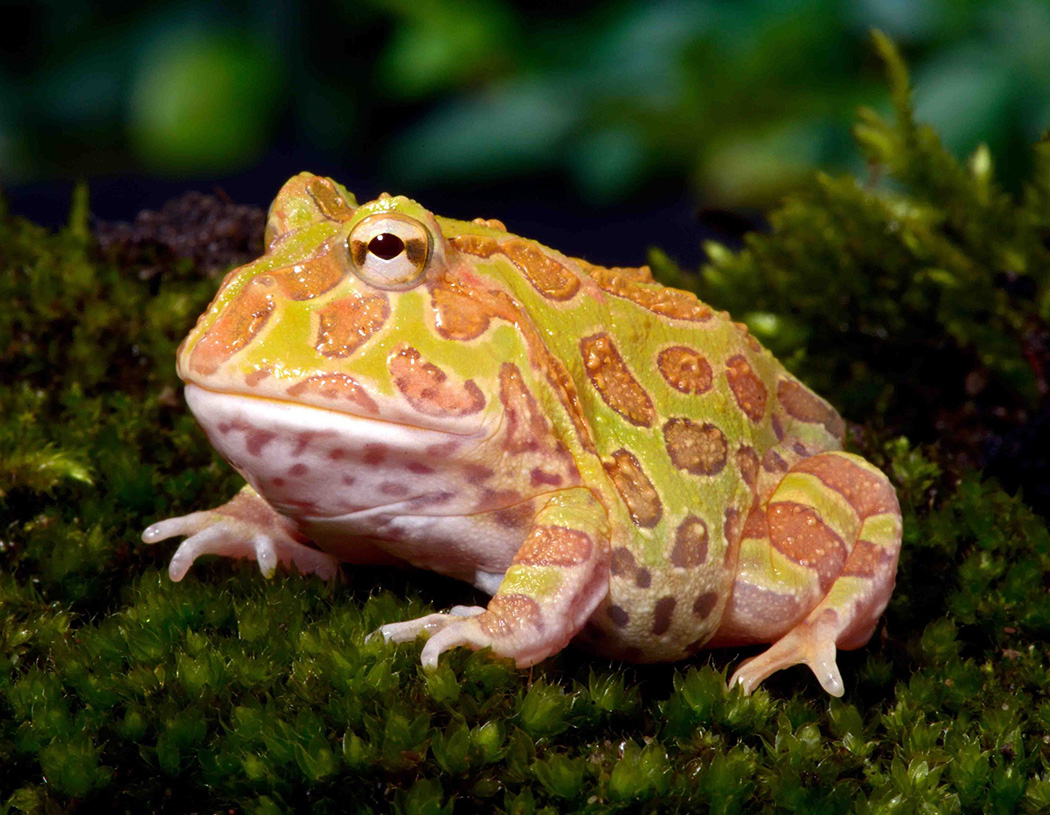
All frogs in the genus Ceratophrys are commonly known as Pacman frogs because of their enormous mouths, powerful bites, and colourful patterns. There are several species and colour variants. Here, we have a variant known as the Albino Pacman Frog. Due to its yellowish colouration, it resembles Pacman even more closely.
It feeds on insects and other animals of a similar size and is even known to cannibalise members of its own species. Unlike active hunters that chase their prey, the Pacman frog prefers to stay still and rely on surprise. Its body is specially adapted for this hunting strategy, known as ambush hunting, allowing it to remain almost perfectly hidden among leaves or soil while waiting for prey to pass nearby. When an animal comes close enough, the frog lunges forward with impressive speed and grabs it using its strong jaws.
This species is native to the dry forests and grasslands of South America, especially in Argentina, Bolivia and Paraguay. It often buries itself in soft soil, leaving only its eyes and mouth visible. This behaviour helps it stay hidden from predators and reduces water loss in hot environments.
Pacman frogs can also enter a special resting state called aestivation during periods of extreme heat, drought, or sometimes colder conditions. During this time, they form a protective cocoon-like layer made from dead skin, which helps trap moisture and reduces dehydration while the frog remains inactive.
Reproduction takes place during the rainy season, when females lay eggs in temporary pools of water. The tadpoles grow rapidly before these pools dry out.
The species is not currently considered threatened with extinction. However, habitat destruction and illegal wildlife trade can still affect wild populations. Protecting amphibians is especially important because they are among the most threatened groups of animals in the world, facing dangers from habitat loss, pollution, climate change and diseases.
Reptiles & Amphibians
12. Cranwell's Horned Frog (Albino Pacman Frog)
All frogs in the genus Ceratophrys are commonly known as Pacman frogs because of their enormous mouths, powerful bites, and colourful patterns. There are several species and colour variants. Here, we have a variant known as the Albino Pacman Frog. Due to its yellowish colouration, it resembles Pacman even more closely.
It feeds on insects and other animals of a similar size and is even known to cannibalise members of its own species. Unlike active hunters that chase their prey, the Pacman frog prefers to stay still and rely on surprise. Its body is specially adapted for this hunting strategy, known as ambush hunting, allowing it to remain almost perfectly hidden among leaves or soil while waiting for prey to pass nearby. When an animal comes close enough, the frog lunges forward with impressive speed and grabs it using its strong jaws.
This species is native to the dry forests and grasslands of South America, especially in Argentina, Bolivia and Paraguay. It often buries itself in soft soil, leaving only its eyes and mouth visible. This behaviour helps it stay hidden from predators and reduces water loss in hot environments.
Pacman frogs can also enter a special resting state called aestivation during periods of extreme heat, drought, or sometimes colder conditions. During this time, they form a protective cocoon-like layer made from dead skin, which helps trap moisture and reduces dehydration while the frog remains inactive.
Reproduction takes place during the rainy season, when females lay eggs in temporary pools of water. The tadpoles grow rapidly before these pools dry out.
The species is not currently considered threatened with extinction. However, habitat destruction and illegal wildlife trade can still affect wild populations. Protecting amphibians is especially important because they are among the most threatened groups of animals in the world, facing dangers from habitat loss, pollution, climate change and diseases.