





Big Fish
Alligator Gar
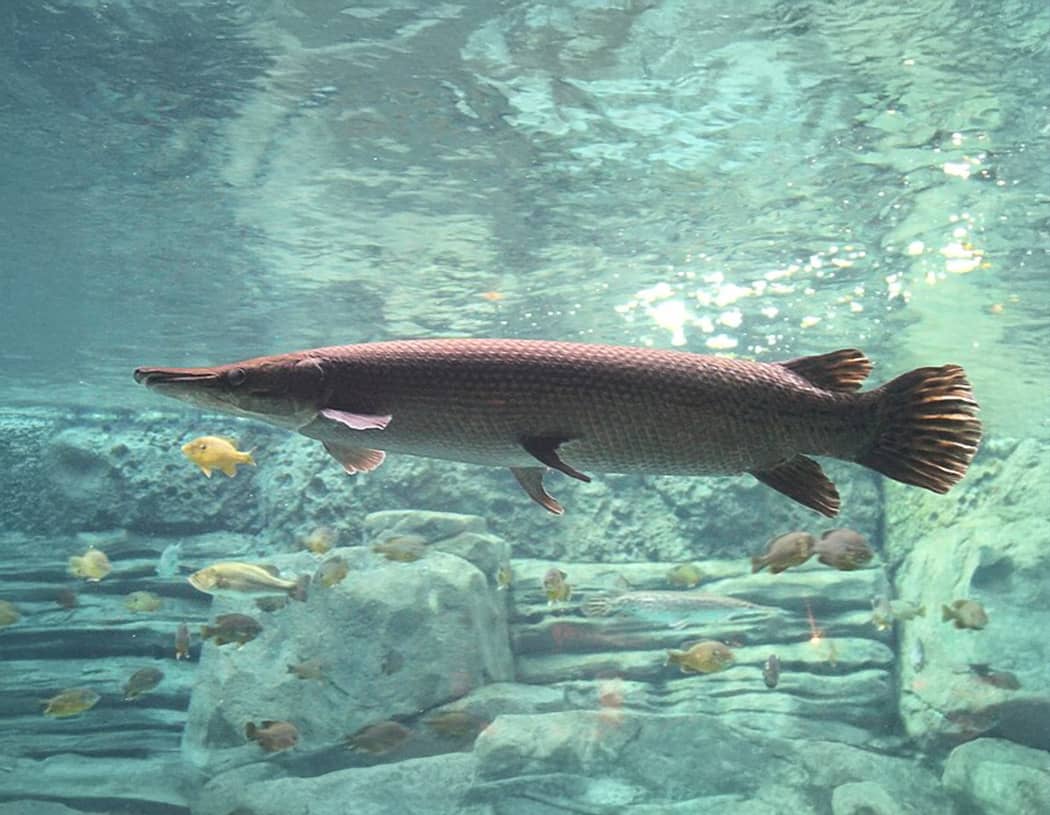
The heavyweight of North America’s freshwater fishes! Its name comes from its broad snout filled and general appearance, giving it a reptile-like look. Covered in diamond-shaped, armor-like scales, this predator is well protected against attacks.
Despite its size and fearsome appearance, the alligator gar is a patient hunter. It drifts slowly through rivers, bayous, and lakes, ambushing fish, waterfowl, and even the occasional small mammal. Its long, broad snout bristles with two rows of sharp teeth are perfect for ambushing prey. These gars lie in wait just beneath the surface, lunging upward to capture fish, birds, turtles, and even small mammals. Remarkably, it can also breathe air thanks to a modified swim bladder, allowing it to survive in waters too murky or low in oxygen for most other species.
Once heavily hunted, its numbers declined, but conservation efforts are helping this ancient predator make a comeback.
Big Fish
Alligator Gar
The heavyweight of North America’s freshwater fishes! Its name comes from its broad snout filled and general appearance, giving it a reptile-like look. Covered in diamond-shaped, armor-like scales, this predator is well protected against attacks.
Despite its size and fearsome appearance, the alligator gar is a patient hunter. It drifts slowly through rivers, bayous, and lakes, ambushing fish, waterfowl, and even the occasional small mammal. Its long, broad snout bristles with two rows of sharp teeth are perfect for ambushing prey. These gars lie in wait just beneath the surface, lunging upward to capture fish, birds, turtles, and even small mammals. Remarkably, it can also breathe air thanks to a modified swim bladder, allowing it to survive in waters too murky or low in oxygen for most other species.
Once heavily hunted, its numbers declined, but conservation efforts are helping this ancient predator make a comeback.