




Big Fish
Black Pacu
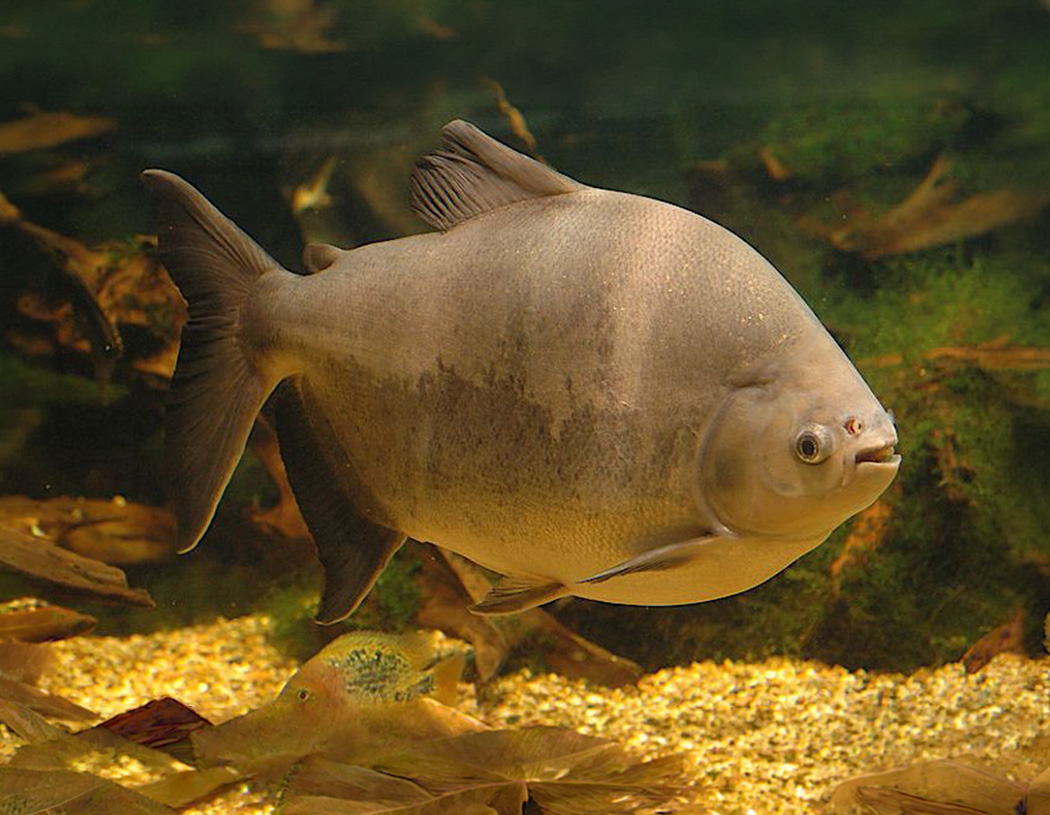
The black pacu is a large freshwater fish from South America, found in the Amazon and Orinoco river basins. Young fish often live in blackwater floodplain areas until they mature, while adults are closely linked to rivers and seasonally flooded forests.
During the rainy season, rivers rise and flood large areas of forest. The black pacu swims among the trees, feeding on fruits and seeds that fall into the water, using its strong molar-like and incisor-like teeth to crush tough food. Some seeds can pass through the fish and be dispersed far from the parent tree, helping plants spread across the floodplain. In this way, the pacu acts like an underwater gardener of the Amazon.
Black pacu reproduce during seasonal river cycles. They spawn in freshwater, releasing eggs and sperm into open water rather than building nests or caring for eggs. After fertilisation, the tiny young drift and grow in floodplain habitats, where food and shelter are available.
Although black pacu are sometimes kept in aquariums, they are not suitable for most private tanks. They are often sold when small, but they can grow to over one metre long and become very heavy. When owners can no longer care for them, some are released into local waters, which is dangerous for native ecosystems. Non-native pacu may compete with local species, disturb food webs, or spread diseases and parasites. Aquarium fish should never be released into the wild.
This species is listed as Near Threatened by the IUCN Red List. It is heavily used in fisheries and aquaculture, and larger adults are especially important because bigger fish can disperse seeds farther. Protecting rivers, floodplain forests and responsible fishing practices helps protect both the pacu and the forest ecosystem it supports.
Big Fish
Black Pacu
The black pacu is a large freshwater fish from South America, found in the Amazon and Orinoco river basins. Young fish often live in blackwater floodplain areas until they mature, while adults are closely linked to rivers and seasonally flooded forests.
During the rainy season, rivers rise and flood large areas of forest. The black pacu swims among the trees, feeding on fruits and seeds that fall into the water, using its strong molar-like and incisor-like teeth to crush tough food. Some seeds can pass through the fish and be dispersed far from the parent tree, helping plants spread across the floodplain. In this way, the pacu acts like an underwater gardener of the Amazon.
Black pacu reproduce during seasonal river cycles. They spawn in freshwater, releasing eggs and sperm into open water rather than building nests or caring for eggs. After fertilisation, the tiny young drift and grow in floodplain habitats, where food and shelter are available.
Although black pacu are sometimes kept in aquariums, they are not suitable for most private tanks. They are often sold when small, but they can grow to over one metre long and become very heavy. When owners can no longer care for them, some are released into local waters, which is dangerous for native ecosystems. Non-native pacu may compete with local species, disturb food webs, or spread diseases and parasites. Aquarium fish should never be released into the wild.
This species is listed as Near Threatened by the IUCN Red List. It is heavily used in fisheries and aquaculture, and larger adults are especially important because bigger fish can disperse seeds farther. Protecting rivers, floodplain forests and responsible fishing practices helps protect both the pacu and the forest ecosystem it supports.