




Reptiles & Amphibians
15. Standing's Day Gecko
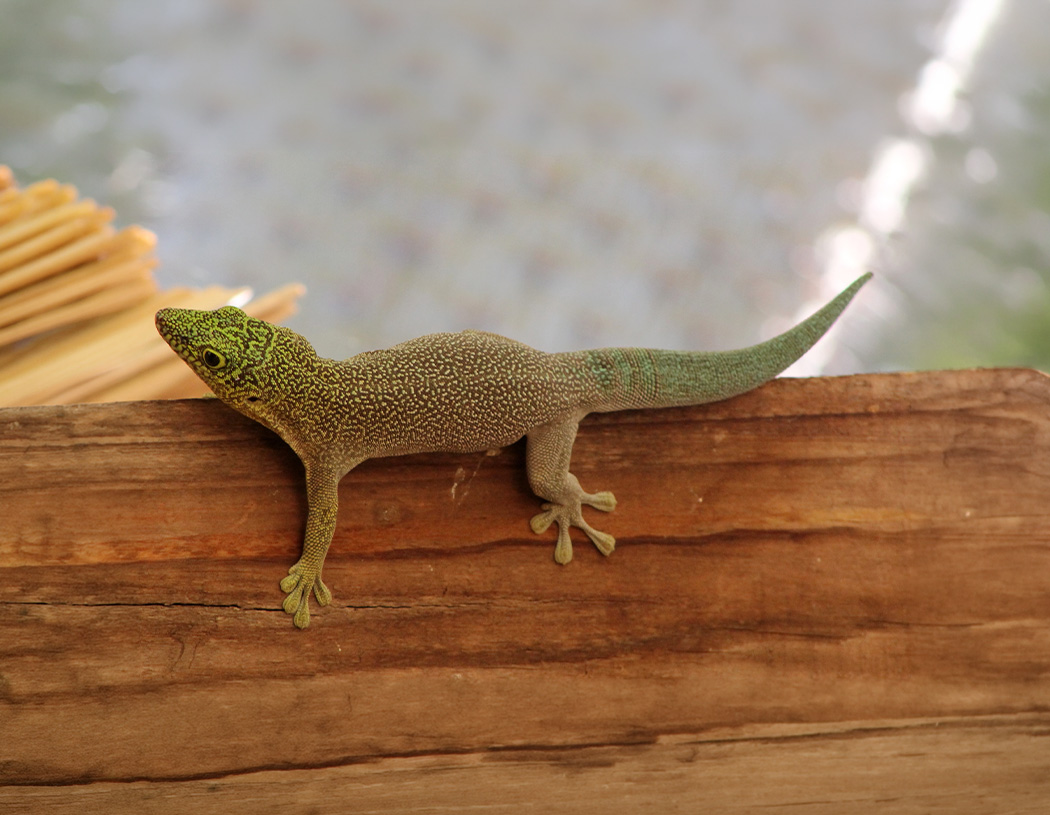
Standing's day gecko is a colourful, tree-living reptile found only in south-western Madagascar. It lives in dry forests and thorny woodland, where it spends much of its time climbing on trees rather than walking on the ground. To move around, it uses special toe pads that can grip many different surfaces. The secret is hidden in the structure of its feet. The toe pads have tiny ridges called lamellae, which are covered in thousands of microscopic hair-like structures called setae. These tiny structures allow the gecko to cling to walls, branches and smooth surfaces without using glue or suction. However, even gecko feet have limits: very slippery materials such as teflon can reduce their grip.
Unlike many geckos, this species is diurnal, which means it is active during the day. It feeds on a mixture of small animals and sweet plant-based foods. In the wild, it is thought to eat insects and other invertebrates, as well as nectar, pollen and fruit. While feeding, it may help move pollen from one flower to another, making it a possible pollinator in its habitat.
Male and female standing's day geckos can show slight differences in colour on the head and tail. However, these differences are usually too subtle to reliably tell them apart by colour alone.
Reproduction happens through egg-laying. Females lay eggs, and the young geckos hatch after developing inside them. Like many reptiles, the hatchlings must quickly learn to hide, climb and find food on their own.
This species is currently listed as Vulnerable by the IUCN Red List. Its main threats include habitat loss, habitat degradation, fragmentation, fires, livestock grazing, slash-and-burn agriculture and excessive collection for the wildlife trade. Protecting Madagascar’s dry forests is essential if this bright little climber is to remain safe in the wild.
Reptiles & Amphibians
15. Standing's Day Gecko
Standing's day gecko is a colourful, tree-living reptile found only in south-western Madagascar. It lives in dry forests and thorny woodland, where it spends much of its time climbing on trees rather than walking on the ground. To move around, it uses special toe pads that can grip many different surfaces. The secret is hidden in the structure of its feet. The toe pads have tiny ridges called lamellae, which are covered in thousands of microscopic hair-like structures called setae. These tiny structures allow the gecko to cling to walls, branches and smooth surfaces without using glue or suction. However, even gecko feet have limits: very slippery materials such as teflon can reduce their grip.
Unlike many geckos, this species is diurnal, which means it is active during the day. It feeds on a mixture of small animals and sweet plant-based foods. In the wild, it is thought to eat insects and other invertebrates, as well as nectar, pollen and fruit. While feeding, it may help move pollen from one flower to another, making it a possible pollinator in its habitat.
Male and female standing's day geckos can show slight differences in colour on the head and tail. However, these differences are usually too subtle to reliably tell them apart by colour alone.
Reproduction happens through egg-laying. Females lay eggs, and the young geckos hatch after developing inside them. Like many reptiles, the hatchlings must quickly learn to hide, climb and find food on their own.
This species is currently listed as Vulnerable by the IUCN Red List. Its main threats include habitat loss, habitat degradation, fragmentation, fires, livestock grazing, slash-and-burn agriculture and excessive collection for the wildlife trade. Protecting Madagascar’s dry forests is essential if this bright little climber is to remain safe in the wild.